
Custom Urethane Casting Services for Functional Prototypes and Low-Volume Production
Plasticpartsmfg provides professional vacuum casting services in Shenzhen, China, engineered for product developers who require high-precision, end-use plastic components without the high initial capital investment of production steel tooling.
Convert 3D CAD geometry into resilient, functional parts matching production-grade thermoplastics. Ideal for pilot testing, verification assemblies, and rapid bridge manufacturing.
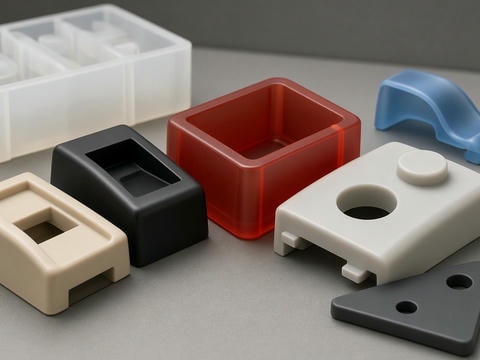
Engineering Capabilities & Process Specifications
Silicone soft-tooling enables intricate undercuts, sharp details, and fine cosmetic texturing with minimal cycle times.
| Process Parameter | Manufacturing Capability |
|---|---|
| Manufacturing Process | Vacuum Casting (Room Temperature Vulcanizing / Urethane Casting) |
| Batch Production Volume | 1 to 100+ pieces per master silicone mold |
| Machining & Part Tolerances | ±0.1% to ±0.3% (governed by part size and wall geometry) |
| Envelope Dimensions | Up to 800 x 600 x 500 mm working chamber capacity |
| Nominal Wall Thickness | Minimum 1.5 mm recommended for continuous resin dispersion |
| Surface Finishing Levels | Matte, Optical Gloss, Mold-Tech Textures, Custom Color Matching, Paint |
| Post-Cure Operations | CNC trimming, threaded brass inserts, adhesive bonding, sub-assembly |
DFM Support
Every file submitted undergoes gate placement, draft angle review, and shrinkage analysis by our Shenzhen engineering facility.
- Mold lifespan optimization (15-25 shots/mold)
- Color matching according to RAL or Pantone codes
- Master patterns produced via high-resolution SLA/PolyJet
Polyurethane Material Formulations
Our polyurethane resins simulate commercial production thermoplastics, enabling mechanical validation under actual operating stress.
ABS-like Formulations
Engineered for high mechanical rigidity, impact durability, and excellent cosmetic fidelity. Ideal for structural housings, electrical device enclosures, and snap-fit assemblies.
Strategic Value for Hardware Development Teams
Urethane casting serves as the practical bridge between early 3D printing and costly multi-cavity injection molds.
Zero Hard Tooling Costs
By eliminating steel and aluminum mold block machining, silicone tooling cuts initial tooling expenditure by up to 90%, liberating capital for design validation.
Isotropic Properties
Unlike FDM or SLS 3D printing, vacuum-cast urethane parts possess isotropic mechanical structure without layer-line delamination risks under mechanical load.
Rapid Iteration Cycle
Updating revisions requires only modifying the SLA master pattern. New silicone tools are cast and ready for resin pouring within 48 to 72 hours.
Production Quality
Parts feature flawless uniform pigmentation, gloss, or texture directly from the mold, delivering market-ready aesthetics for regulatory trials and trade shows.
Industries and End-Use Sectors
From pre-production validation batches to customized low-volume end-use parts, Plasticpartsmfg supports critical hardware programs.
Consumer Electronics
Cosmetic front panels, tactile membrane frames, wearable enclosures, and light guide lenses requiring high surface definitions.
Industrial Automation & Robotics
End-effector housings, sensor shrouds, motor caps, and custom manifold routing channels capable of vibration dampening.
Automotive Engineering
Interior dashboard trim mockups, air ducting, lighting lens verification, and functional under-hood bracket tests.
Medical & Scientific Devices
Non-clinical diagnostic device bodies, benchtop analyzer casings, ergonomic grips, and fluid-resistant maintenance panels.
Pilot Runs & Market Testing
Produce 20 to 200 sellable units to capture early adopter feedback, satisfy crowdfunding campaigns, or clear safety certifications while multi-cavity injection molds are being built.
How to Request a Project Quotation
Our engineers review geometries and deliver comprehensive DFM feedback alongside competitive batch pricing.
CAD Data
Upload 3D files in standard formats: STEP, STP, IGES, X_T, or high-density STL.
Material Needs
State mechanical priorities (hardness, rigidity, transparency, or thermal resistance).
Volume & Timeline
Indicate initial trial quantities and your target dispatch schedule.
Finishing Details
List insert requirements, secondary threading, silkscreen graphics, or painting specs.
Submit Files for Engineering Review
Our technical team in Shenzhen analyzes draft angles, wall thicknesses, and potential vacuum entrapment areas to ensure flawless cast output.