
Custom PA Extrusion Molding Services
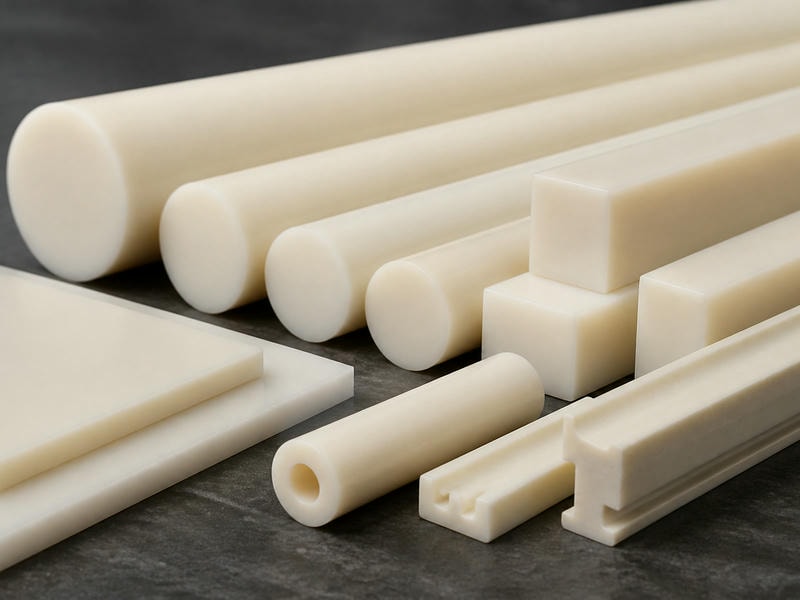
Plasticpartsmfg delivers precision Polyamide (PA6, PA66, glass-filled nylon) extrusion solutions designed for industrial environments demanding high tensile strength, wear resistance, and thermal endurance. Based in Shenzhen, China, we support engineering teams and procurement leaders from functional prototyping through to steady-state volume production.
Engineering Capabilities & Technical Specifications
We manage end-to-end extrusion parameters to guarantee structural consistency, cross-sectional fidelity, and accurate mechanical properties.
| Capability | Specification |
|---|---|
| Material Grades | PA6, PA66, Glass-Filled Nylon (15%-50%), Heat-Stabilized PA, Impact-Modified Nylon |
| Process Typologies | Continuous Profile Extrusion, Precision Tubing, Open and Hollow Geometric Profiles |
| Dimensional Tolerance | ±0.10 mm to ±0.30 mm (contingent upon cross-sectional complexity and wall gauge) |
| Surface Finishing | Standard Matte, Smooth Calibration, Embossed Textures, or Custom Tool Finishes |
| Secondary Operations | In-line cut-to-length, CNC multi-axis milling, precision drilling, punch pressing, sub-assembly |
| Production Scalability | Rapid pilot runs for qualification through continuous container-volume bulk delivery |
Why Choose PA (Nylon) for Profile Extrusion
Polyamide resin compounds bridge the gap between commodity plastics and industrial metals, balancing mass reduction with extreme mechanical resilience.
Mechanical Rigidity
Exceptional tensile yield and structural strength under repeated mechanical cycles, retaining load-bearing capacity in rigorous framing and track uses.
Sliding & Wear Resistance
Low coefficient of friction and high abrasion resistance make extruded nylon profiles the industrial standard for linear bearings, wear strips, and conveyor rails.
Broad Thermal Stability
Exhibits stable dimensional properties across elevated operational temperatures and prevents creeping under steady long-term thermal exposure.
Chemical & Oil Resistance
Inherent protection against greases, automotive fluids, industrial fuels, hydraulic compounds, and aggressive organic washing solvents.
Reinforcement Flexibility
Easily blended with chopped glass fibers, carbon fibers, or elastomeric modifiers to modulate flexural modulus, rigidity, or shock absorption.
Dielectric Performance
Superior electrical breakdown resistance suitable for raceways, cable conduit guides, and high-voltage phase separation channels.
Common Applications Across Sectors
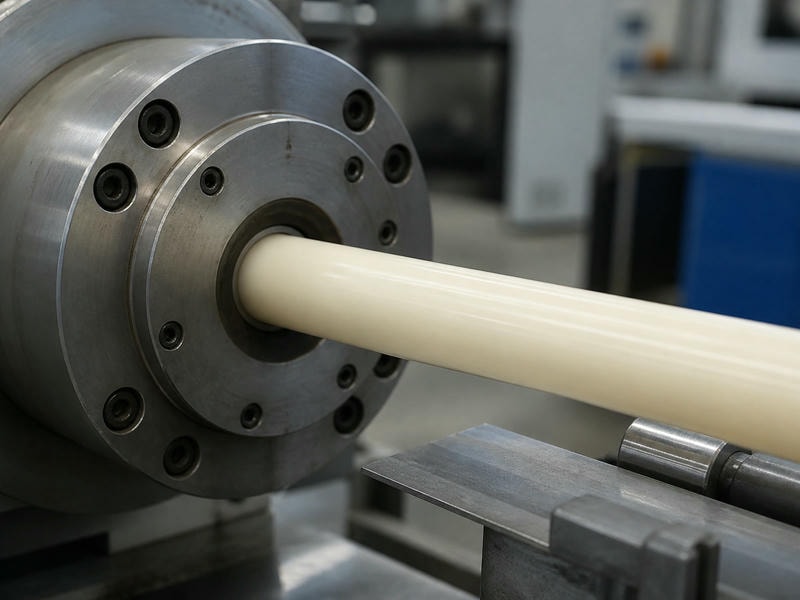
Our polyamide extrusion lines manufacture structural and fluid handling profiles deployed in factory automation, commercial transportation, chemical equipment, and consumer hardware.
Conveyor Systems & Material Handling
Wear strips, curved belt guides, low-friction side rails, and sliding support profiles.
Structural & Assembly Frameworks
Lightweight housing profiles, snap-fit mounting tracks, protective trim, and equipment edge guards.
Fluid & Pneumatic Handling
Reinforced nylon pressure tubing, chemical transfer lines, and automotive fuel vapor conduit.
Custom Electrical Insulation
Dielectric barrier tracks, wire isolation trunking, and specialized busbar snap-on covers.
DFM Rules & Extrusion Workflow
Proper extrusion profile engineering ensures balanced melt flow, controlled vacuum sizing, and rapid die calibration. Switch between design rules and process steps below.
Uniform Wall Thickness
Maintain constant cross-sectional wall thickness. Abrupt variations trigger differential shrinkage, causing warpage and internal vacuum voids during cooling.
Generous Corner Radii
Eliminate razor-sharp inside corners. Incorporate a minimum 0.5–1.0 mm radius to promote uniform polymer melt flow and prevent peak notch stress.
Optimized Hollow Geometry
Keep hollow chambers symmetrical. Complex multi-void hollow dies demand specialized vacuum sizing sleeves and can increase initial setup iteration cycles.
Tolerance Calibration
Extrusion is continuous. Distinguish between critical functional fit dimensions (tight tolerance) and non-critical profile perimeters to curtail unnecessary tool modifications.
Die Tooling Development
EDM wire cutting and CNC machining of custom extrusion dies and vacuum calibration fixtures matching your exact profile geometry.
Resin Compounding
Strict desiccant pre-drying of hygroscopic PA pellets, combined with UV stabilizers, carbon blacks, or glass fiber compounding as designated.
Continuous Extrusion & CMM
High-precision barrel temperature profile regulation followed by inline vacuum sizing water tanks and laser-micrometer dimensional tracking.
Secondary Fabrication
Precision circular saw cutting to specified lengths, secondary CNC slotting, deburring, punch operations, and bulk protective packing.
Get an Engineering Evaluation & Quotation
Our engineering team reviews cross-sectional CAD drawings within 24 business hours to provide tooling feasibility, material recommendations, and cost-effective batch pricing.
Recommended Submission Checklist:
- CAD Files: 2D PDF drawings with tolerances alongside 3D STEP, IGES, or DXF cross-sections.
- Resin Specification: PA6, PA66, glass percentage (e.g. 30% GF), color code, or specialized UL94 flame grade.
- Volume Forecast: Initial sample batch size and projected annual linear meters / piece count.
- Secondary Processes: Precise cut length tolerances, hole patterns, surface finish, or kitted packaging.