
Custom Large Plastic Parts Manufacturing Services
Plasticpartsmfg delivers turnkey manufacturing solutions for heavy-duty, large-scale plastic components. Based in Shenzhen, China, we support product developers, equipment builders, and engineering teams in fabricating durable, high-volume, and complex hollow structures from 100 mm to over 3,000 mm.
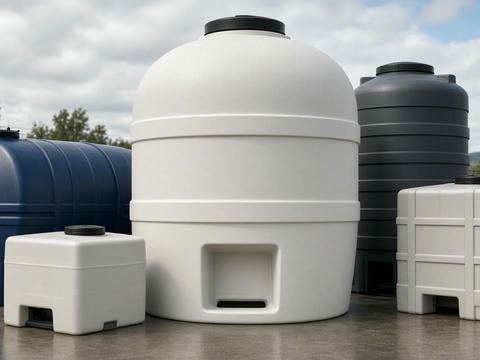
Core Capabilities for Large Plastic Components
Engineered tooling setups and calibrated equipment designed to meet tight structural and dimensional requirements across diverse industrial sectors.
| Capability | Specifications & Options |
|---|---|
| Primary Processes | Rotational Molding, Blow Molding, Large-scale Thermoforming |
| Material Selection | LLDPE, HDPE, PE, Nylon, and engineering-grade polymers |
| Part Size Range | 100 mm to 3,000+ mm |
| Wall Thickness | 2 mm to 15 mm (process dependent) |
| Production Volume | Low-volume prototypes to medium-batch production runs |
| Secondary Operations | CNC trimming, drilling, insert installation, ultrasonic welding, sub-assembly, and surface finishing |
| Supported File Formats | STEP, STP, IGES, X_T, STL, DXF, DWG, PDF |
Manufacturing Processes for Large-Scale Parts
Compare our two primary large-part molding processes to determine the best match for geometry, tooling investment, and batch size.
Rotational Molding (Rotomolding)
Rotational molding is our flagship process for large, hollow, and seamless structural components. The dual-axis rotation inside heated chambers yields virtually stress-free polymers with consistent corner strength and high impact resistance.
Tanks, large chemical containers, industrial equipment housings, heavy-duty bins, and recreational products.
Cost-effective cast or fabricated aluminum molds enable economical entry for large-scale geometries without high-pressure tooling expenses.
Engineering & Technical Considerations
Balancing structural integrity, shrinkage rates, and material distribution begins during initial DFM review. Our engineers evaluate your 3D models against four core criteria:
Wall Thickness Control
We analyze your CAD geometry to ensure balanced material distribution, identifying potential sink areas or thin walls in deep-draw cavities, sharp corners, and ribs.
Structural Integrity & Load Ribs
For fluid tanks and heavy housings, we evaluate load-bearing stress, hydrostatic pressure, and external impacts, recommending structural ribbing patterns and reinforced radii.
Insert & Hardware Integration
Molded-in brass or stainless-steel threaded inserts, pipe fittings, and reinforcement brackets eliminate secondary assembly fixtures and safeguard mechanical joints.
Surface Texture & UV Stabilization
Custom compounded resins offer UV8 to UV20 weatherability, flame retardancy (UL94), chemical resistance, and molded-in textures to reduce surface scuffing in the field.
Applications Across Industries
Our large-format molding infrastructure supports critical supply chains across international markets:
Industrial Equipment
Chemical dosing tanks, bulk fluid containers, machine shrouds, and heavy-duty protective equipment housings.
Automation & Robotics
Modular AGV shells, service robot body panels, control station cowlings, and impact-resistant covers.
Medical & Laboratory
Large diagnostic equipment chassis, bio-waste vessels, and temperature-stable specimen transport containers.
Consumer & Recreational
Heavy-duty utility bins, outdoor recreation hulls, commercial playground modules, and insulated coolers.
Quality and Inspection Standards
Every production run follows defined inspection protocols to guarantee structural strength and geometric compliance before dispatch.
Dimensional Accuracy
CMM and 3D optical scanning to verify tolerances against provided STEP and 2D engineering prints.
Wall Thickness Uniformity
Non-destructive ultrasonic thickness gages measure critical radii, corners, and load-bearing walls.
Material Integrity
Verification of virgin resin certificates, drop-impact testing, chemical resistance, and UV testing.
Secondary Finishing
Post-demold flash removal, CNC trimming inspection, thread checking on inserts, and assembly fit checks.
Request a Quotation for Your Project
Submit your CAD files (STEP, STP, or IGES preferred) alongside your target quantities and material requirements. Our engineering team will perform a manufacturability review and supply a production quote within 24 to 48 hours.
Send Project Specifications
Complete the inquiry form below to initiate your technical review.